US Inflation Cools While Economy Stays Resilient
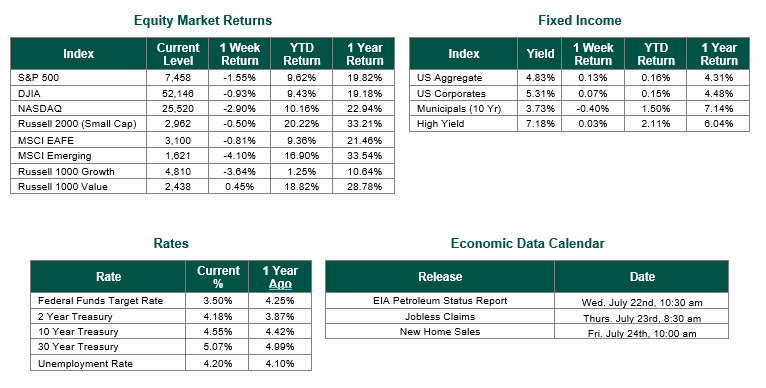
Global equity markets finished lower for the week. In the U.S., the S&P 500 Index closed the week at a level of 7,458, representing a decline of 1.55%, while the Russell Midcap Index moved -0.33% last week. Meanwhile, the Russell 2000 Index, a measure of the Nation’s smallest publicly traded firms, returned -0.50% over the week. As developed international equity performance and emerging markets were lower, returning -0.81% and -4.10%, respectively. Finally, the 10-year U.S. Treasury yield moved lower, closing the week at 4.55%.
Last week’s U.S. data were mostly softer on inflation and mixed-to-firm on activity. CPI surprised lower, with headline CPI falling 0.4% month over month versus a 0.2% decline expected, and the annual rate easing to 3.5% from 4.2%; core CPI was flat versus a 0.2% gain expected and slowed to 2.6% from 2.9% prior. PPI final demand also came in below consensus, falling 0.3% month over month versus expectations for no change, while the annual rate slowed to 5.5% from 6.0%–6.5% previously reported/revised depending on the source; core producer prices were also softer than expected.
The labor market and consumer were more resilient than inflation data suggested. Initial jobless claims fell to 208,000, below expectations around 217,000–218,000 and down from 216,000 the week before, while continuing claims also eased to 1.805 million. Retail sales rose 0.2% in June, matching consensus, but slowed from May’s revised 1.0% increase; the underlying details were mixed, with auto-ex sales down 0.2% versus a smaller expected decline, even as broader spending held up.
Consumer sentiment improved meaningfully at the end of the week, with the preliminary July University of Michigan index rising to 54.4 versus 51.0 expected and 49.5 in June. That gain suggested households felt somewhat better as gasoline prices eased, even though sentiment remained well below historical norms.
Second-quarter earnings were a clear highlight, especially for the big banks, which broadly beat expectations and showed that trading, investment banking, and consumer spending remain healthy. JPMorgan beat on both EPS and revenue, Goldman Sachs delivered a large upside surprise, and Bank of America, Citigroup, and Wells Fargo also reported results above consensus, with management commentary pointing to resilient credit quality, solid card spending, and strong capital-markets activity.
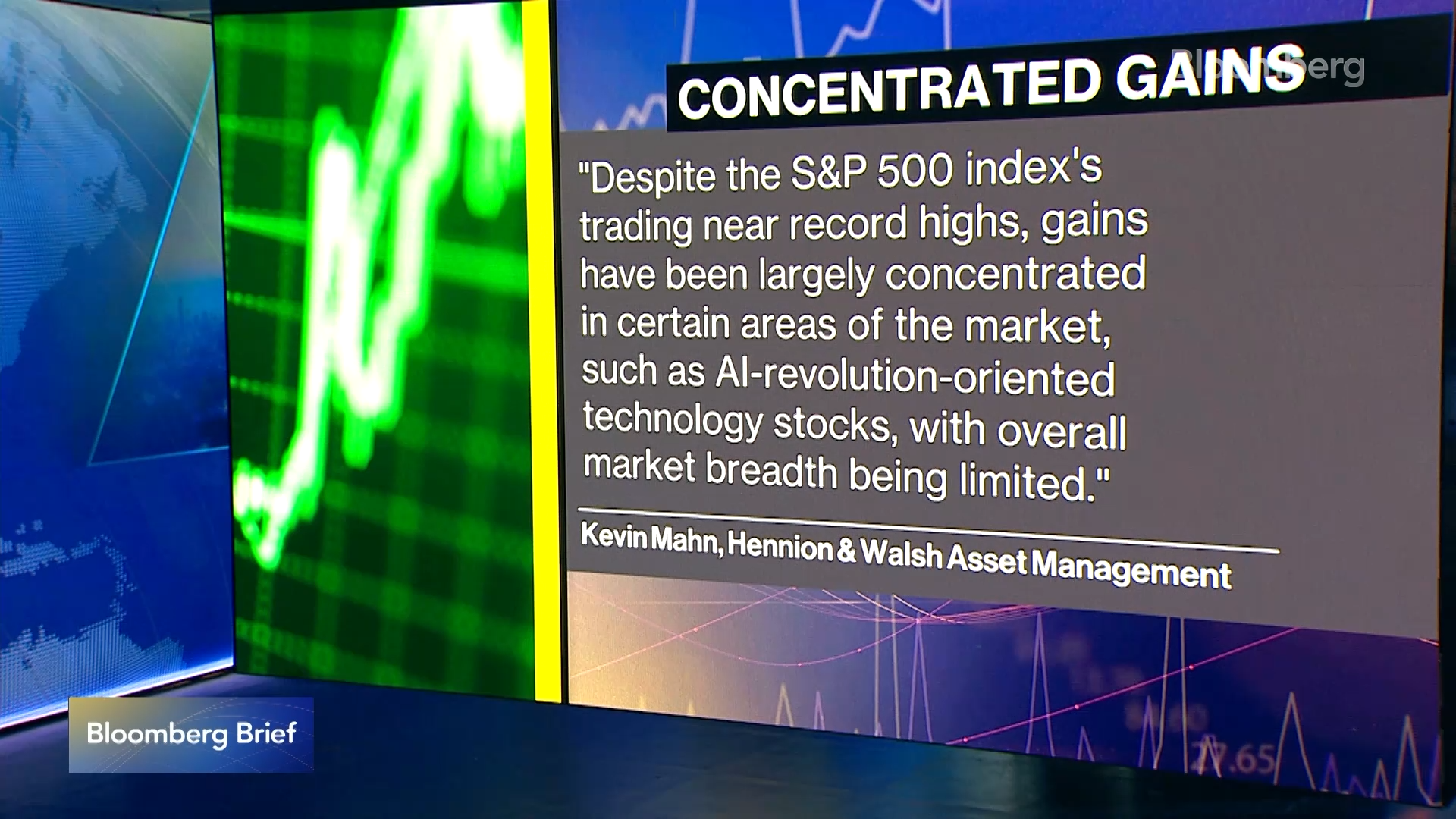
Taken together, the week looked like a mild disinflation story with no obvious collapse in demand: inflation cooled more than expected, claims stayed low, retail spending held up, sentiment improved, and big-bank earnings underscored that the corporate sector—especially financials—still has operating momentum. We will continue monitoring the earnings results throughout the next few weeks, as corporate earnings have been a major driver in this year’s upward movement in the market’s performance.
Best wishes to all for the week ahead!
Equity and Fixed Income Index returns sourced from Bloomberg on 7/17/26. CPI and PPI are sourced from the U.S. Bureau of Labor Statistics. Weekly Jobless Claims are sourced from the U.S. Department of Labor. Retail Sales are sourced from the Department of Commerce. Consumer Sentiment is sourced from the University of Michigan. Corporate Earnings are sourced from FactSet. International developed markets are measured by the MSCI EAFE Index, emerging markets are measured by the MSCI EM Index, and U.S. Large Caps are defined by the S&P 500 Index. Sector performance is measured using the GICS methodology.
Disclosures: Past performance does not guarantee future results. We have taken this information from sources that we believe to be reliable and accurate. Hennion and Walsh cannot guarantee the accuracy of said information and cannot be held liable. You cannot invest directly in an index. Diversification can help mitigate the risk and volatility in your portfolio but does not ensure a profit or guarantee against a loss.